Why Slate Auto's Minimalist $20K EV Truck May Be the Biggest Disruption in the U.S.
September 15, 2025•11 min read
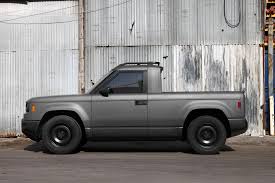

Why Slate Auto’s Minimalist $20K EV Truck May Be the Biggest
Disruption in the U.S.
When
Slate Auto unveiled its entry-level electric pickup earlier this year, it didn’t come with a
panoramic screen, complex driver-assist features or even power windows. Instead, the Jeff
Bezos–backed startup delivered something unexpected: a bare-bones EV truck with a starting
price of $20,000 (after incentives), something unheard of in an era where even compact EVs
regularly breach $30K.
Within weeks, Slate had amassed
over 100,000 reservations, proving that there’s a massive,
underserved market for affordable electric workhorses. As production ramps up in Indiana and
deliveries inch closer, it’s becoming increasingly clear: this minimalist pickup might be the
biggest disruption the U.S. EV market has seen in years.
Breaking the Mold: What Makes Slate Different
At a time when electric trucks like the Ford F-150 Lightning, Rivian R1T and Tesla Cybertruck
emphasize tech, luxury and high performance, with prices often exceeding $60,000, Slate took
the opposite approach. It stripped the truck down to the essentials:
• A lightweight chassis and modular battery pack
• Manual window cranks and basic controls

• A utilitarian interior designed for work, not show
The idea is simple: give buyers a functional electric pickup at a price they can actually afford.
The company has described its approach as “right-sized technology”, focusing on utility over
complexity.
How It Stacks Up
While Slate’s truck doesn’t compete head-to-head with high-powered EV pickups, its disruptive
nature lies in price and accessibility.
Truck Model
Starting Price
Range (Est.)
Notable Features
Slate Auto EV Pickup
$20K (after incentives)
200+ miles
Minimalist design, modular add-ons
Ford F-150 Lightning
$52K
240–320 mi
Advanced tech, full-size capability
Tesla Cybertruck
$57K
250–500 mi
High performance, polarizing design
Rivian R1T
$69K
270–350 mi
Off-road focused, upscale features
This table shows Slate isn’t competing in horsepower wars or luxury features. Instead, it’s
targeting buyers who want simple utility at half the price of its closest competitors.
The Modular Ecosystem: Customizing on Demand

One of Slate’s key innovations isn’t visible at launch – it’s the truck’s modular ecosystem.
Buyers can start with the bare-minimum pickup and later add features like:
• An upgraded infotainment kit with stereo and touchscreen
• Larger battery modules for extended range
• Cargo box extensions or camper-style conversions
This approach keeps upfront costs low while letting owners expand capability over time. In
practice, it’s similar to how smartphone users buy base models and add accessories later. This
modularity not only keeps pricing flexible but also shortens production time since all trucks
leave the factory in a standard configuration.
Why It Resonates: A Shift in Consumer Priorities
The overwhelming reservation numbers show Slate tapped into a latent demand. While
premium EVs grab headlines, many Americans, especially in rural or working-class communities,
need
basic, affordable trucks for everyday use.
A fully-loaded Rivian or Lightning is overkill for someone hauling tools to a job site or running
farm errands. By skipping luxury frills and software gimmicks, Slate made EV ownership
approachable for a demographic that’s often overlooked in the electrification conversation.

Production Plans and Pricing Challenges
Slate’s Indiana plant is scheduled to begin building trucks in late 2026, with initial output
capped to ensure quality control. Although federal EV tax credits initially helped keep the target
price below $20,000,
those incentives are set to expire, raising the effective base price closer to
$27,500.
Despite this, Slate says it will still undercut competitors by a large margin thanks to:
• Simplified manufacturing: Fewer parts and no complex infotainment systems
• Vertical integration: In-house battery and drivetrain production
• Volume-focused strategy: Scaling to 250,000 units annually within three years
Whether Slate can maintain margins at this price point remains a big question, but the startup
argues that its lean design philosophy gives it a structural cost advantage over legacy
automakers.
A Potentially Massive Market Shift
If Slate succeeds, the implications for the U.S. automotive market are huge. By proving that an
EV pickup can be profitable at mass-market pricing, it could force established players to
rethink their strategies.
Automakers like Ford, GM and Stellantis currently rely on high-margin trucks to fund their EV
transitions. An affordable competitor would pressure them to produce simpler, cheaper EV

models, much like Japanese automakers disrupted Detroit in the 1970s with efficient, budget-
friendly cars.
EV adoption overall could accelerate. One of the biggest barriers to electrification is cost. A
reliable electric truck at $20K, or even under $30K, brings EVs within reach of millions of new
buyers, especially those who’ve resisted the transition due to high entry prices.
Challenges on the Road Ahead
Slate’s disruptive vision doesn’t come without hurdles:
• Production Scaling: Building a new truck plant and supply chain from scratch is
notoriously difficult.
• Range Limitations: A base range of just over 200 miles could be a sticking point for
some buyers.
• Competition: Major automakers may fast-track affordable EV pickups in response,
leveraging existing dealer networks and brand loyalty.
• Durability Perception: Stripped-down interiors and minimal electronics might be
misinterpreted as “cheap,” rather than intentional simplicity.
How Slate navigates these issues will determine if its truck becomes a true market shaker or a
niche product.

Slate Auto’s $20K minimalist EV truck is more than a budget-friendly pickup – it’s a challenge to
the entire way electric vehicles are designed, priced and sold in the U.S. By cutting out luxuries
and focusing on essential utility, Slate is making EV ownership realistic for working Americans
and everyday drivers who’ve been priced out of the market.
If production meets expectations and consumer demand holds, Slate could reshape not only
the electric truck segment but also the broader EV adoption curve. In a market saturated with
premium models and tech-laden designs, Slate’s no-frills approach feels not just refreshing –
but potentially revolutionary.
